

How to Plan a National Park Wedding (Without Losing Your Mind Over Permits)
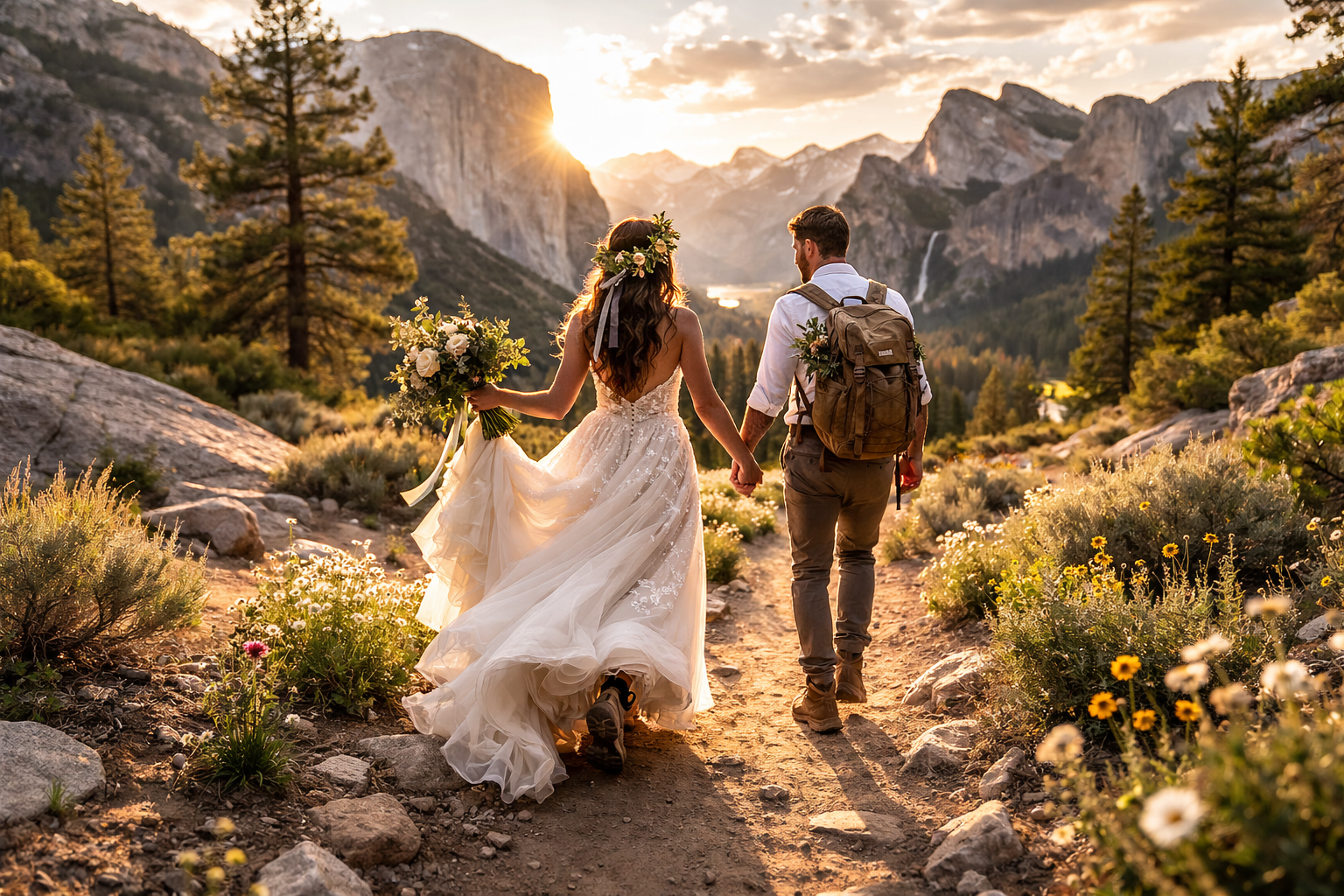
A few years ago, I helped two friends get married under a heavy patch of lodgepole pines. As they read their vows, their voices bounced off the freezing mountains, and the sun barely poked over the horizon.
That freezing, early morning is exactly why national park weddings are my favorite events to handle.
Instead of dropping an insane amount of money on a standard hotel ballroom, you can say “I do” with nothing but cold air and dirt under your boots. If you are leaning toward a wedding that feels a bit more like a hiking trip, here is what I know as a planner who focuses on smaller, wallet-friendly outdoor parties
The "Free Venue" Trap and the Reality of Paperwork
A lot of couples think that because public lands belong to the public, setting up a wedding is totally free.
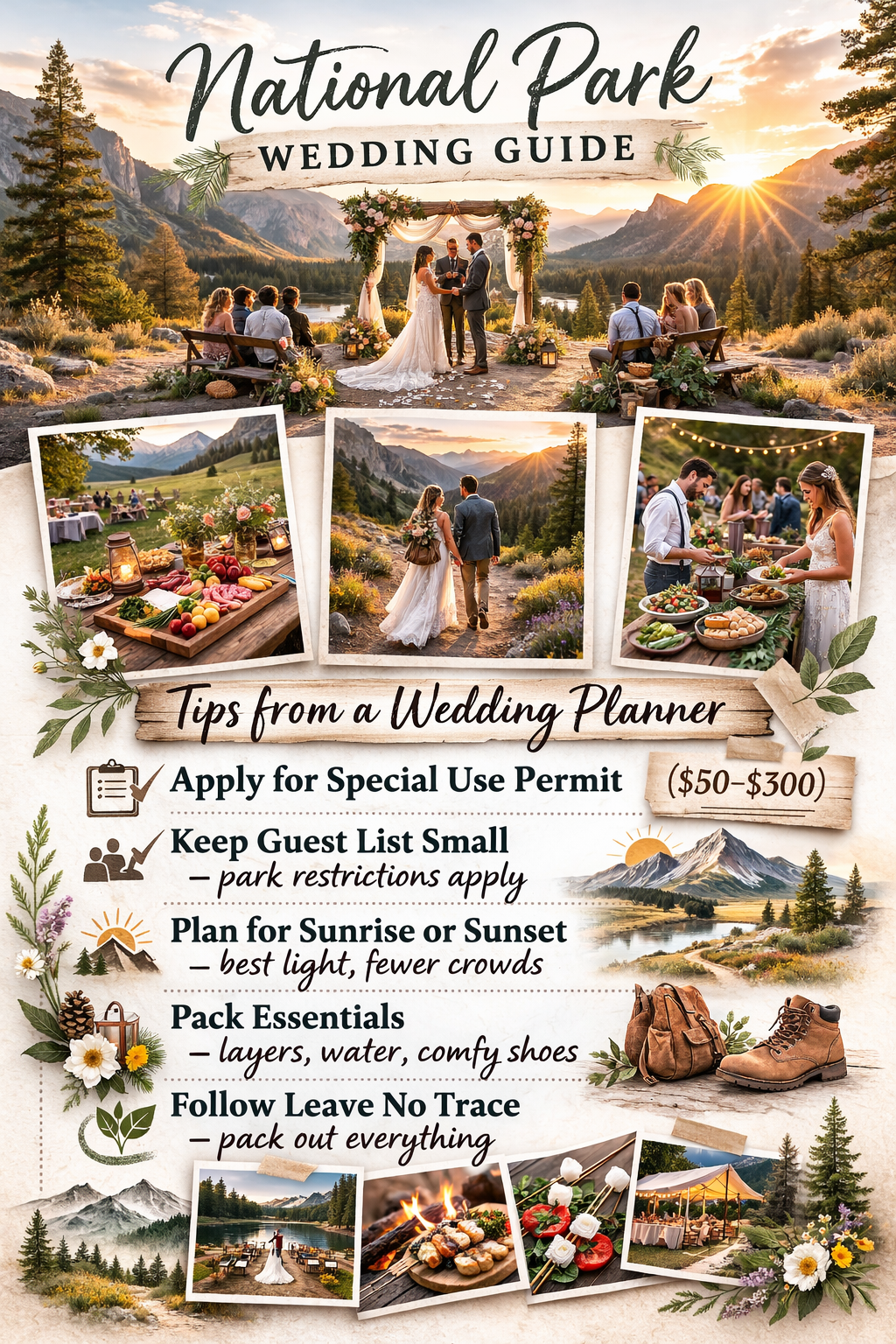
It isn't. If you want to host an actual event in a national park, you need a Special Use Permit (SUP).
The Bill: Most parks charge between $50 and $300 for this. Think of it as your venue rental. It is still the cheapest venue you will ever find.
The Catch: Park rangers will cap your guest list, restrict you to specific dirt patches, and tell you exactly what time you are allowed to be there. You have to apply months in advance, and they usually make you list a backup spot just in case.
Where to actually find the permits: Don't just Google the park name. You need to look for the specific "Special Use" page on the NPS (National Park Service) website. Here are two real examples so you can see what the paperwork actually looks like:
The Planner Warning: Always put aside another $150 or so for a "Commercial Photography" permit. Many parks force your photographer to hold their own paperwork to shoot on federal land.
Picking the Dirt Patch (and Trimming the Guest List)
We have 63 national parks. You can stand in front of giant redwoods, weird desert rocks, or massive lakes. But once you pick the park, you have to pick the exact overlook.
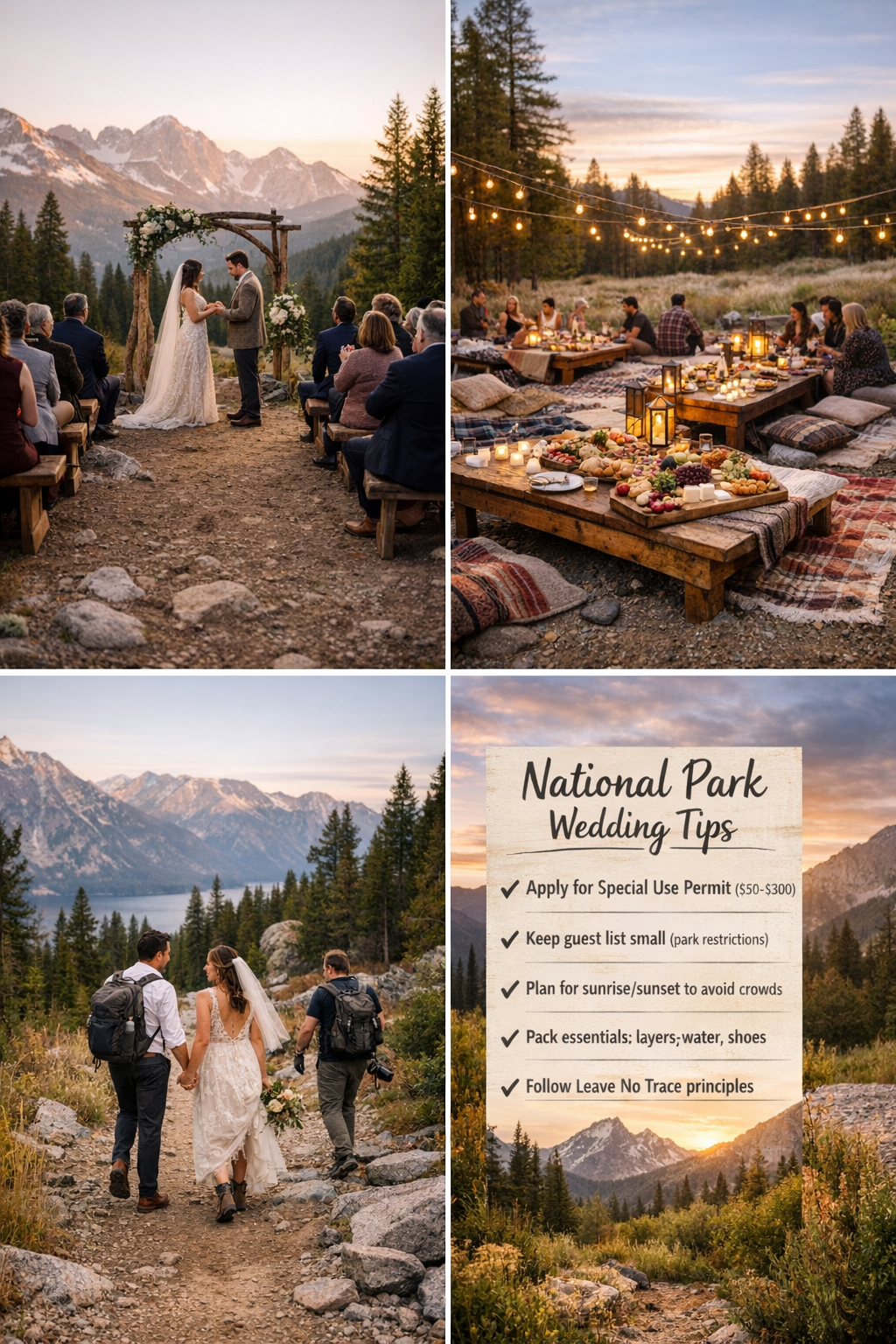
Because nature is giving you a ridiculously good background, you are naturally forced to cut your guest list. This is actually a good thing. For example, Yosemite has a very specific rule where certain locations are only allowed if your group is under 11 people total (and yes, that counts the photographer and the officiant).
When we pick a spot, I look at the harsh reality of who is coming:
The Hike: A three-mile uphill walk is a cool story for you two.
The Reality Check: If your grandma is coming, we need a spot with a short, paved walkway right next to the parking lot.
Dodging the Tourists
Big parks are jammed with people, even on a random Tuesday in October. If you don't want a crowd of tourists in neon jackets watching you cry during your vows, you have to mess with the timeline.
First Light or Last Light: Plan the ceremony for right when the sun comes up, or right before it drops. The morning light looks incredibly good on camera, and it wipes out 90% of the foot traffic.
Skip the Weekend: Tuesdays and Wednesdays are your best bet.
The Weather Problem: Snow sticks around much longer at high altitudes, and summer thunderstorms happen almost every single afternoon in places like Colorado. Check the historical weather apps before locking in a date.
The Clothes That Actually Work
Outdoor weddings require clothes that make sense. Heavy, structured ballgowns look cool, but they are a nightmare to drag through the mud. Light, loose dresses are way easier to walk in.
Do not wear your nice shoes on the trail. Wear ugly, tough hiking boots for the walk, and shove your dress shoes in a tote bag to change into once we hit the ceremony spot. Also, bring a heavy jacket. A thin shawl isn't going to cut it if the wind picks up.
The Wilderness Reception
You absolutely cannot throw a traditional party with a DJ and a dance floor in a protected forest, but you can still feed your people.
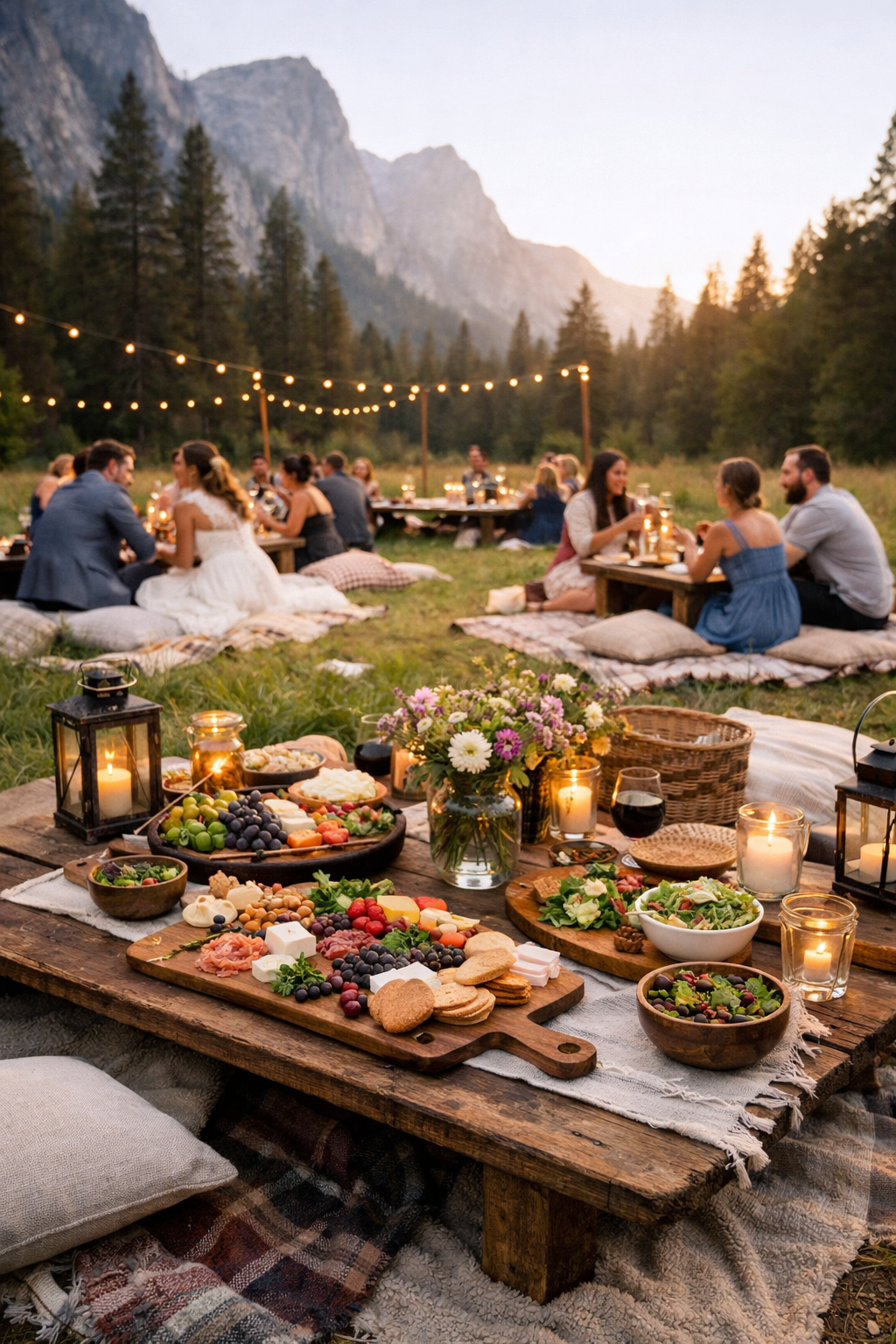
The Blanket Setup: I love throwing a post-ceremony picnic. We drop some heavy blankets on the grass and open up boxes of local cheese, cured meats, and really good bread.
Boxed Meals: Keep the food easy to carry. Sandwiches wrapped in heavy paper, pasta salads shoved into mason jars, and normal-sized cookies.
Food Trucks: If your spot is near a designated paved lot, hiring a food truck is a smart move. (Just triple-check that the vendor understands park rules).
The "Leave No Trace" Rule
Whatever you haul in, you have to haul out. Following Leave No Trace (LNT) principles is not optional; it's the law.
Do not throw rice, birdseed, or even "biodegradable" confetti. It messes with the local birds. Use bubble wands instead.
Stay on the marked dirt paths. Do not crush the local weeds for a photo.
Only use florists who know what they are doing. Some popular wedding flowers are highly invasive and can wreck a local ecosystem if seeds drop.
Planning a wedding in a national park takes a bit more digging and a lot more emails to park rangers. But when it is all done, it feels stupidly romantic. When you look back at your photos, you aren't going to remember the paperwork—you'll just remember how the mountains looked while you promised your life to someone.