

Personal Guide to a Fresh Caprese Salad Bar for Weddings
Why I Chose Caprese in the First Place
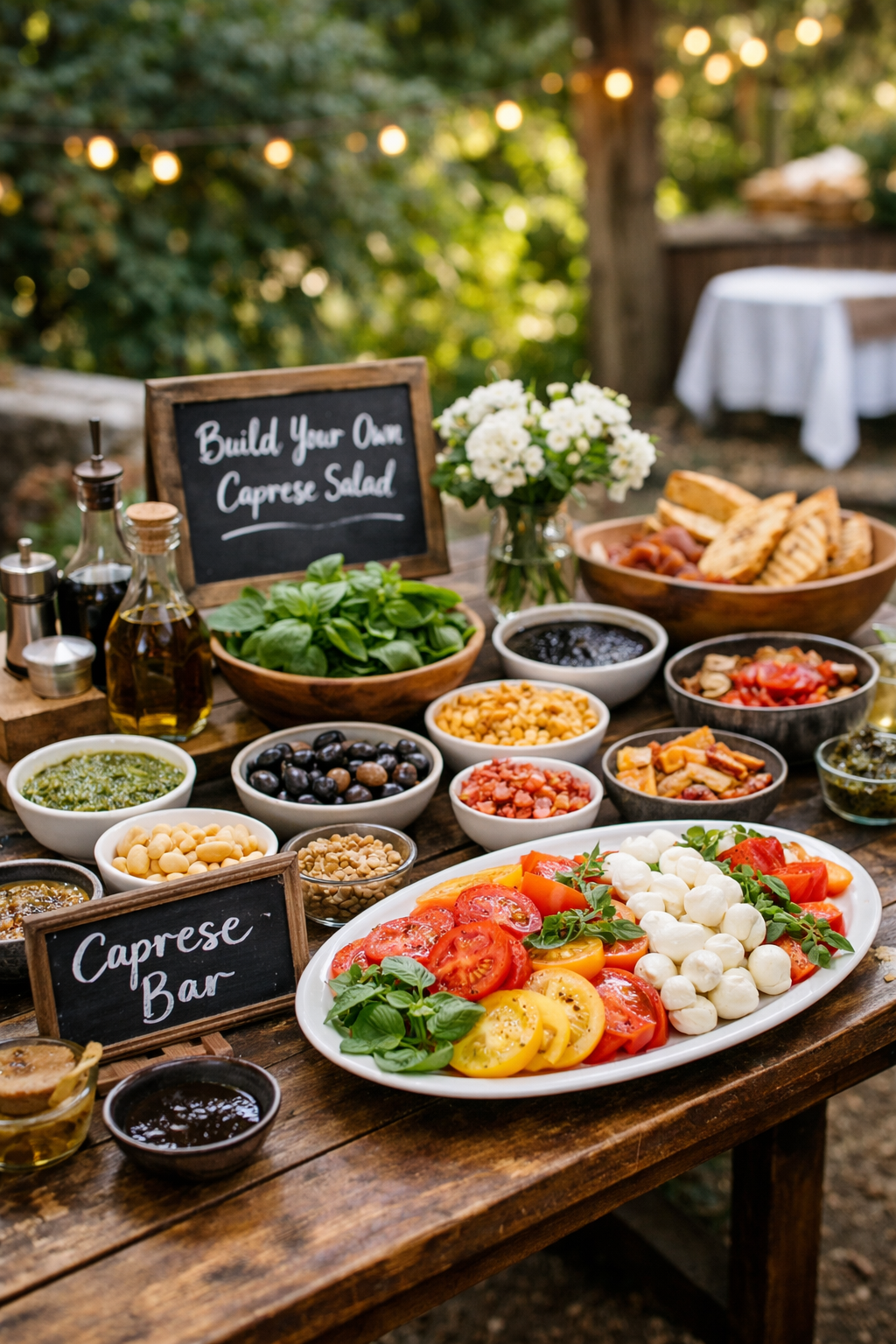
When I was planning a reception, I kept coming back to one problem, cocktail hour food is either forgettable or fussy. I wanted something that felt light, looked good on the table, and gave people a reason to gather without needing a server hovering nearby.
That’s how I landed on a Caprese salad bar.
Caprese is simple on paper, tomato, mozzarella, basil, olive oil, salt, maybe balsamic. But at a wedding, that simplicity works in your favor. It looks bright, it smells fresh, and it fits a lot of dietary needs without making a big deal out of it. It also scales well. You can set it up for 30 guests or 200, and it still feels intentional.
And honestly, it just feels “wedding-right.” It’s polished without being precious.
The Ingredient Plan That Made It Feel Elevated (Not Just a Salad Table)
A Caprese station lives or dies on ingredient quality. You don’t need rare items, you need good versions of normal ones.
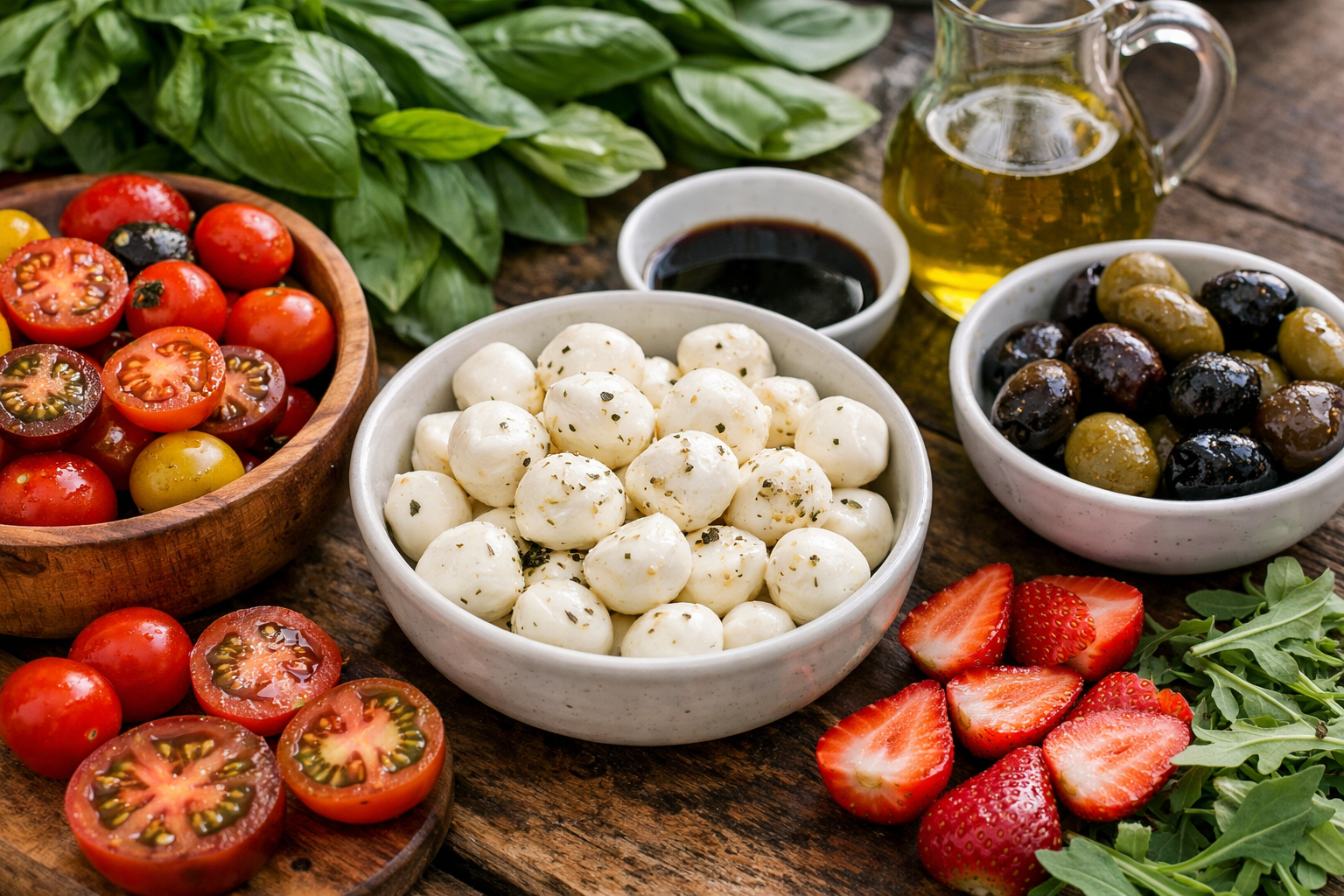
Tomatoes, I used a mix because one type always feels flat. We did multi-color cherry tomatoes (easy for guests), plus a few sliced heirlooms for that “wow” factor. If you can only choose one, pick what’s actually in season, that matters more than the variety name.
Fruit add-ons, I was skeptical about fruit at first, it sounded like something you do for a styled photo shoot. Then I tried it. Stone fruit and berries turn Caprese into something people talk about. We put out peaches and nectarines, plus raspberries. The sweet and creamy combo with burrata was a surprise hit.
For Cheese, I’d do at least two options.
Mozzarella pearls for the classic move, also easy to portion.
Burrata for the “okay, this is nice” moment.
I marinated the mozzarella pearls in olive oil with lemon zest, dried oregano, a little red pepper, and cracked black pepper. It took five minutes, and it made the whole station taste more layered.
Greens and herbs, Basil is the heart of it, but giving people a few greens makes the station feel more like a build-your-own plate instead of a single bite.
Basil (lots of it)
Arugula for a peppery edge
Baby spinach for the guests who want mild
I put basil in mason jars like little bouquets. It looked great and kept it from wilting into a sad pile.
Finishes and extras, This is where people personalize.
Good olive oil (don’t overthink it, just avoid the cheapest)
Balsamic glaze (clean, drizzle-friendly)
Flaky sea salt (adds crunch, people notice)
Prosciutto (optional, but it disappears fast)
Olives, capers, artichokes (briny options help balance the sweet fruit)
Marcona almonds (only if you can label them clearly for allergies)
How I Set Up the Table So It Didn’t Turn Into a Traffic Jam
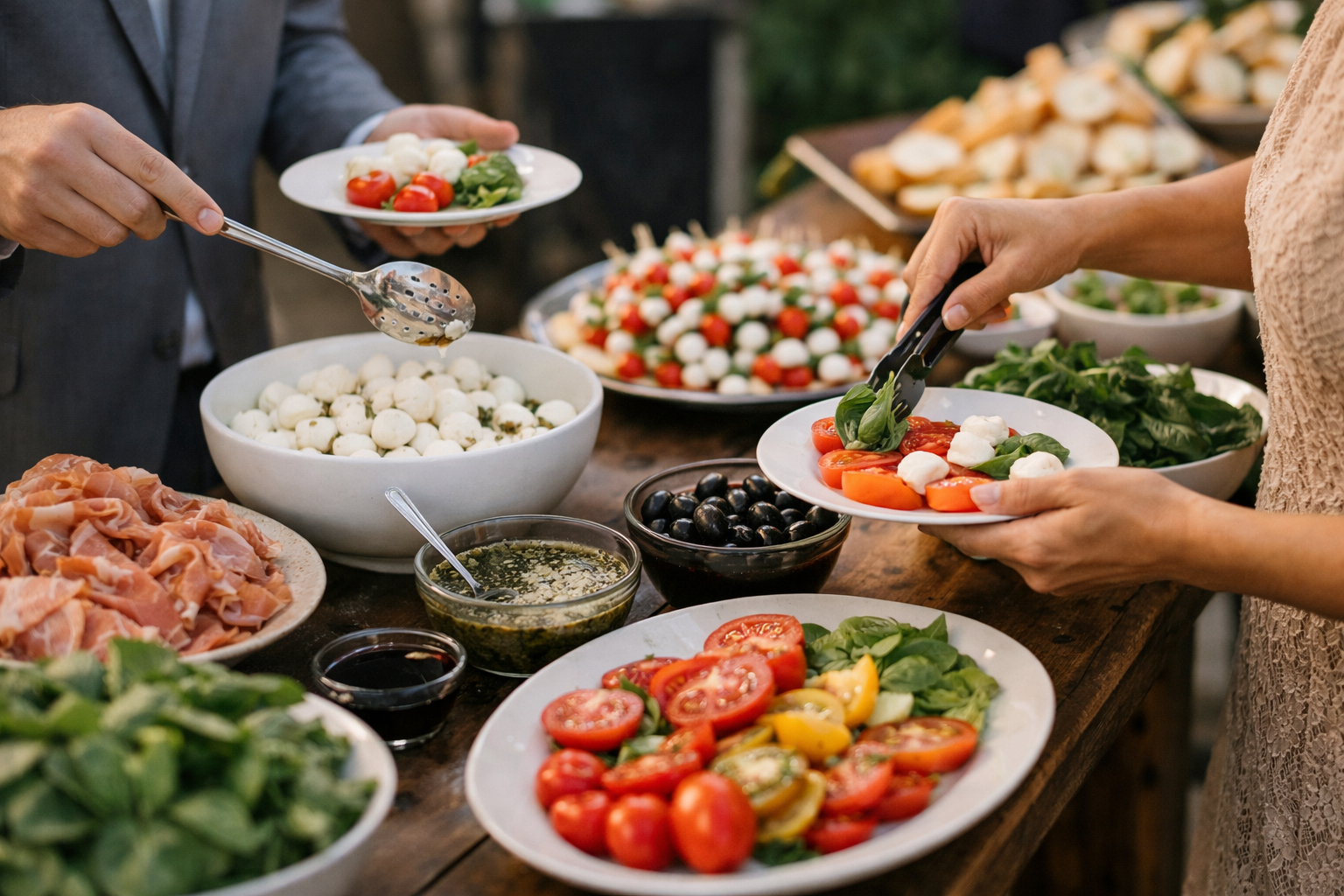
Placement matters more than people think. I put ours near the entrance to the reception area so guests hit it naturally during cocktail hour, instead of forgetting it existed.
I built the layout like a simple assembly line:
Plates, forks, napkins
Greens
Tomatoes and fruit
Cheese
Herbs
Extras (olives, meats, nuts, capers)
Oil, balsamic, salt
That order sounds small, but it prevents guests from backtracking and bumping into each other.
For the look, I kept everything neutral, white platters, ceramic bowls, wooden boards, then let the food provide the color. If you try to decorate the table and the food, it gets busy fast.
One trick that helped, I staggered heights using a couple of crates and a cake stand so everything was visible. When bowls sit flat in one line, people reach over each other and it gets messy.
Food Safety Without Making It Weird
Caprese is perishable. The goal is to keep it safe without making it feel like a science project.
Here’s what worked for us.
Use smaller bowls and refresh them often instead of putting out one giant serving of tomatoes or cheese.
Nest the mozzarella bowl over ice and swap it out every hour.
Burrata in smaller dishes, refreshed about every 30 minutes.
Separate utensils for everything, no “one spoon for all” situations.
I also asked one person (my cousin) to do quick check-ins every 20 minutes. Not staffing it full-time, just keeping it tidy, refilling bowls, wiping drips, making sure tongs didn’t wander. That tiny effort kept the station looking “on purpose” all night.
Signage That Actually Helps Guests (Without Looking Like Instructions for a Recipe)
Most guests know Caprese, but people still like a nudge, especially if you add fruit or less common extras.
I used one small sign at the start:
Build a plate, greens + tomatoes, add cheese, grab basil, drizzle oil and balsamic, finish with salt.
Then a few little pairing cards near the fruit, like:
“Peach + burrata + basil”
“Strawberries + mozzarella + balsamic”
“Arugula + prosciutto + capers”
It gave people permission to try something new without feeling unsure.
Ways to Make It Feel Like Your Wedding
This station is flexible, so it’s easy to tie it to your location or season.
Late summer, heirloom tomatoes, peaches, basil, it practically designs itself.
Spring, add shaved radish, asparagus tips, lemon-forward oil.
Fall, figs, roasted squash cubes, maybe a little honey drizzle if that fits your menu.
We did a small Florida nod with citrus segments, grapefruit and orange. It sounds odd until you taste it with arugula and mozzarella, it’s bright in a really good way.
Also, don’t skip bread. Even if it’s “technically a salad,” guests love turning it into a crostini situation. We had sliced baguette, grissini, and small toasted rounds.
Prep Timeline and What It Cost Me
This is the part people underestimate, prep takes time, but it’s manageable if you split it across days.
2 days before, marinate mozzarella.
Day before, gather supplies, labels, bowls, serving utensils.
Morning of, wash greens, slice tomatoes and fruit, pack into containers.
On-site, about 30 minutes to set up if everything is prepped and organized.
For about 50 guests, I bought roughly.
10 lbs mixed tomatoes
6 lbs mozzarella pearls + 3 large burrata
5 lbs stone fruit
4 bags arugula/spinach
Lots of basil and a few extra herbs
Olive oil + balsamic glaze
Extras like olives, bread, prosciutto
Total came out around $180, roughly $3.50 per person, with extras included. The biggest money lever is seasonality. In-season tomatoes and fruit taste better and cost less, so you’re winning twice.
A Few Small Etiquette and Inclusivity Touches That Help
To keep it from getting chaotic:
A small note reminding guests to use the utensils, and grab a fresh plate if they go back.
A discard bowl for olive pits, toothpicks, and napkins.
Nuts clearly labeled and placed a little apart from everything else.
Inclusivity-wise, it’s naturally vegetarian, and it’s easy to add:
A dairy-free mozzarella option for vegan guests
Gluten-free crackers or just keep bread separate and optional
Looking back, this was one of the best choices we made for cocktail hour. People didn’t just grab food and walk away, they hovered, talked, compared plates, went back for different combos. It had that farmers-market feeling without being messy or overdone.
If you want a wedding food station that feels fresh, looks beautiful, and doesn’t require a lot of complicated execution, a Caprese salad bar is a strong bet. Keep the ingredients good, keep the layout simple, and let guests build something that fits their own taste.