

The Hidden Costs of Wedding Dessert Bars (And How to Budget for One)
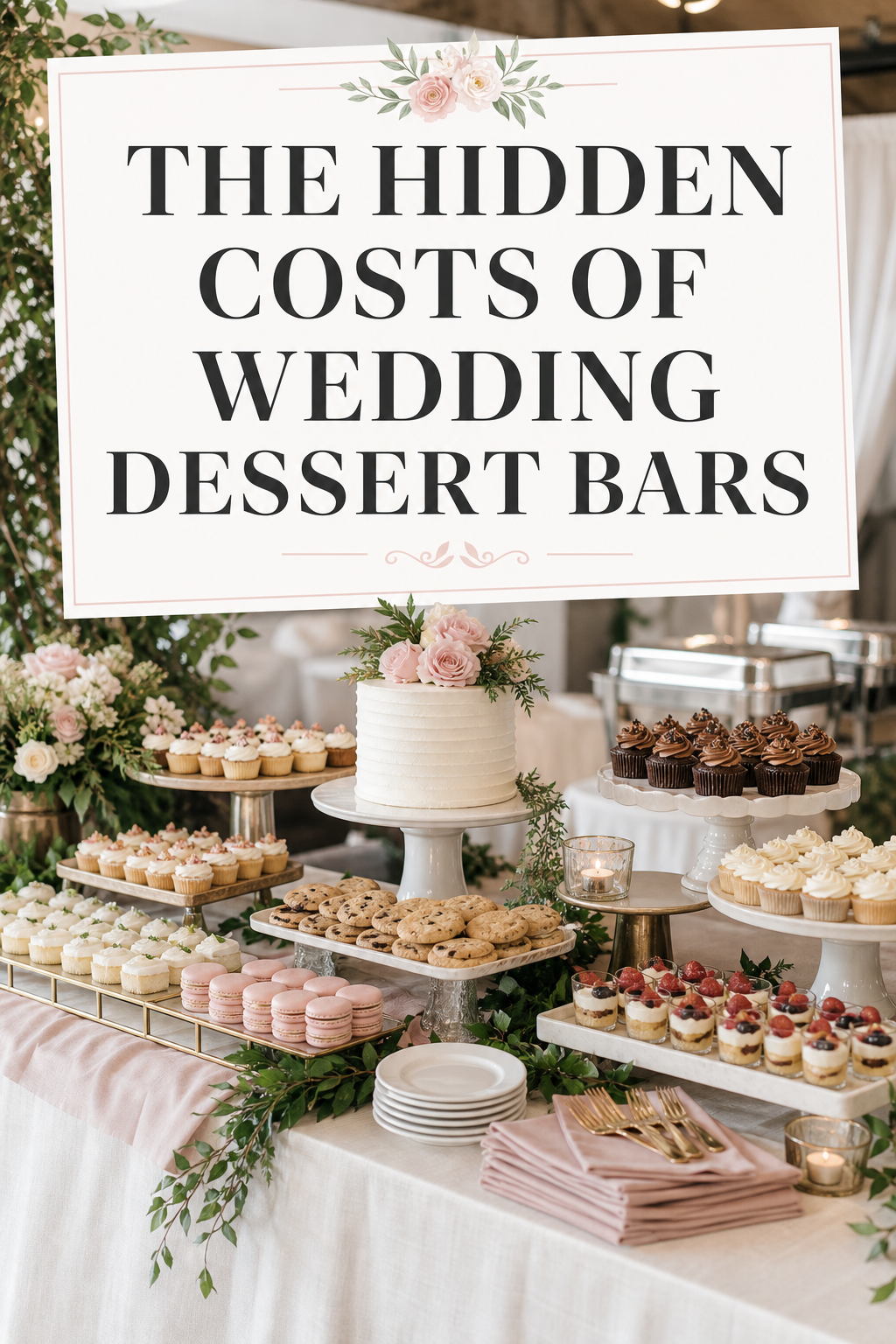
A wedding dessert bar looks simple in photos: order a few pretty treats, arrange them on stands, and let guests help themselves. In real life, the sweets are only part of the bill. Delivery, rentals, setup, serviceware, refrigeration, signage, and cleanup can turn an affordable idea into a surprisingly expensive reception feature.
The goal is not to talk you out of a dessert table. It is to help you budget for the version you actually want, without paying for details your guests will barely notice.
Quick Cost Overview
Simple self-serve table: about $4 to $8 per guest
Styled dessert bar: about $8 to $15 per guest
Premium custom display: $15 or more per guest
Best value: three dessert types, one focal cake, and rented or venue-owned display pieces
Biggest hidden costs: delivery, setup, rentals, serving supplies, staffing, and leftovers
These ranges vary by location, baker, menu, and venue rules. Ask for an itemized quote so you can compare the complete cost, not only the price per dessert.
The Desserts Are Only the Starting Price
Bakers often quote cookies, cupcakes, macarons, mini pies, or cake slices by the dozen. That makes it easy to calculate the food cost, but it does not show what it takes to turn those boxes into a finished dessert station.
Ask whether the quote includes delivery, unpacking, arranging, labels, cake stands, trays, tongs, napkins, plates, and end-of-night pickup. If the answer is no, create separate budget lines for each item.
Delivery and Setup Fees
Delicate desserts do not travel like ordinary catering trays. Tiered cakes, frosted cupcakes, chilled desserts, and macarons may require climate-controlled transport and careful placement. Delivery can cost more when the venue is far from the bakery, has stairs, has a narrow setup window, or requires vendor insurance.
Setup is also different from delivery. A driver may drop off boxes, while a stylist or baker charges separately to arrange the table. Get both services in writing.
Display Rentals Add Up Fast
Cake stands, tiered trays, risers, glass jars, platters, table linens, and decorative backdrops make the biggest visual difference. They are also easy to overbuy.
Before renting anything, ask the venue and caterer what they already own. A coordinated set of simple white platters usually photographs better than a crowded table of mismatched specialty pieces. If rentals require a damage deposit or next-day return, include those costs and assign someone responsible for the return.
Plates, Forks, Tongs, and Napkins
Small service items are rarely featured in inspiration photos, but guests need them. Mini desserts may still require cocktail napkins, dessert plates, forks, tongs, scoops, or individual wrappers. Disposable items can be affordable, but premium compostable or decorative pieces cost more than many couples expect.
Confirm whether your caterer charges a per-person serviceware fee. If the venue requires china, you may also pay for extra dishwashing or labor.
Staffing and Replenishment
A self-serve dessert bar still needs attention. Someone has to replenish trays, remove empty wrappers, wipe spills, cut the cake, protect food from heat or insects, and pack leftovers.
If the catering contract does not include dessert service, ask whether you can add one attendant for the first hour. That is often enough for a medium-size reception and looks more polished than leaving every tray out at once.
Refrigeration and Venue Rules
Cheesecake bites, mousse cups, cream-filled pastries, and some frostings cannot sit safely at room temperature for the entire reception. Your venue may charge for refrigeration space or limit when outside food can arrive.
Outdoor weddings create additional problems. Heat, humidity, wind, and insects can ruin a display quickly. Choose stable desserts, use covered containers where appropriate, and arrange for smaller batches to be brought out over time.
Ordering Too Many Desserts
The most common waste comes from treating every dessert as a full serving. If you offer four varieties, most guests will sample two or three pieces, not take one of everything.
For a reception that also serves wedding cake, plan roughly two small dessert pieces per guest. Without a traditional cake, plan two to three mini pieces per guest. Increase the count slightly when desserts are the main late-night snack or when the guest list includes many children.
Do not order 100 cupcakes, 100 cookies, 100 macarons, and 100 brownies for 100 guests unless you want a large amount left over.
How to Make It Look Expensive for Less
Choose three dessert types with different heights, colors, and textures. Use one small cutting cake or a tray of statement desserts as the focal point. Arrange the rest in repeated rows instead of scattering them across an oversized table.
Use greenery, flowers from the ceremony, framed labels, and venue-owned linens to connect the display to the wedding design. Concentrating the desserts on a smaller table creates abundance without requiring hundreds of extra pieces.
Questions to Ask Before Booking
Is delivery included, and is setup a separate fee?
Who provides stands, trays, tongs, plates, forks, and napkins?
Are rental deposits, pickup, and returns included?
Who cuts the cake and replenishes the table?
Which desserts require refrigeration?
Can leftovers be packed, and who supplies the containers?
Does the venue charge a cake-cutting or outside-dessert fee?
What is the final price after tax, gratuity, and service charges?
A Realistic Budget Formula
Start with the dessert order, then add delivery and setup, display rentals, serviceware, staffing, taxes, gratuity, and a 10 percent cushion. That total is the true dessert-bar budget.
If the number is too high, reduce the variety before reducing the quality. Three well-presented options feel intentional. Seven small quantities often look cluttered and cost more to transport, label, and arrange.
A wedding dessert bar can be memorable and budget-friendly when the plan includes the unglamorous details. Price the full setup, confirm who handles each task, and order for how guests actually eat. The best dessert tables are not the largest ones. They are the ones that look generous, stay fresh, and do not leave the couple with a surprise bill after the reception.