

Building a Smoothie Bowl Bar for Your Brunch Wedding (2026 Edition)
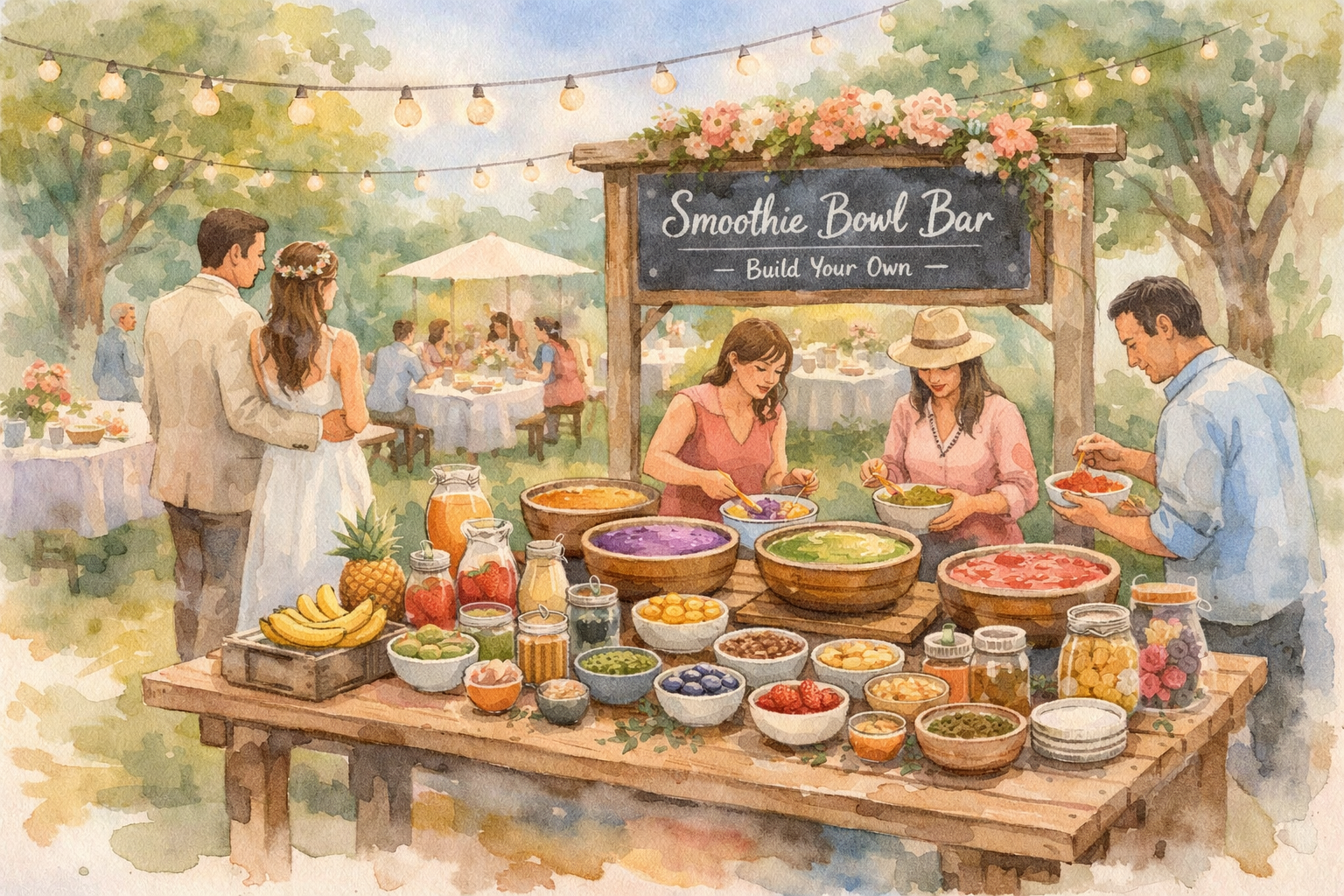
Planning my own micro‑wedding on a tight budget taught me that serving delicious food doesn’t have to cost a fortune. One of my favourite discoveries was the build‑your‑own smoothie bowl bar. It combines the relaxed vibe of a brunch reception with the freshness of farmers’ market produce and invites every guest to play chef. Since there isn’t much information available about smoothie bowl bars for weddings, I’m sharing everything I've learned so your celebration can be both affordable and unforgettable.
Why a Smoothie Bowl Bar?
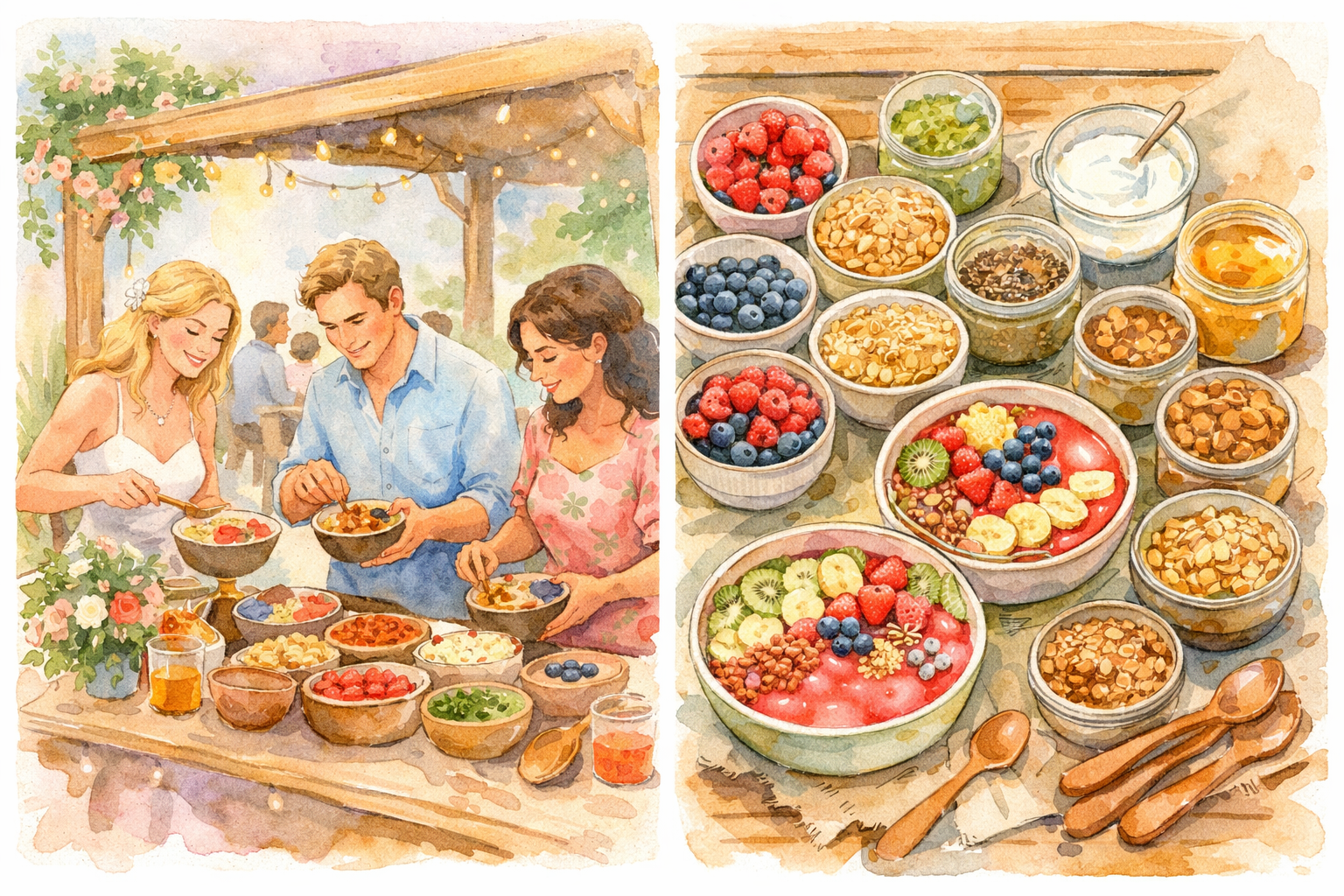
I wanted something fresh and memorable for our daytime celebration, but most blogs talked about charcuterie boards, donut walls or s’mores bars. Smoothie bowls felt different: they’re colourful, healthy, and easy to customise. Guests can pick their favourite fruits and toppings, and they double as breakfast and dessert. Because smoothie bars are still uncommon at weddings, choosing this trend helps your wedding stand out.
Interactive Experiences Guests Love
Interactive food stations are one of the biggest trends in recent years. Caterers at Pinch Food Design say that playful, hands‑on courses encourage conversation and excitement. When guests crack a sugar ceiling on a tres leches dessert or assemble their own pavlova, it becomes a memorable moment. A smoothie bar delivers that same sense of participation: everyone gets to pour, swirl, and sprinkle until their bowl is a work of art.
Cost and Health Benefits
Brunch menus are known for being budget-friendly because ingredients like eggs and fruit cost less than steak or seafood. A case study of a small Sunday brunch wedding showed that food and drinks came to around $1,200 out of a $7,000 budget. Smoothie bowls are particularly affordable; a simple recipe using frozen berries, banana, and almond milk can cost as little as $1.90 per serving. They’re also naturally gluten‑free and vegan when you choose plant milk, so guests with dietary restrictions can enjoy them.
Planning Your Smoothie Bowl Bar
Equipment and Layout
To set up your station, you’ll need a few basic pieces:
Pitchers and squeeze bottles: Two or more large pitchers hold your smoothie bases. To make dispensing easy, you can also use squeeze bottles, as suggested by a DIY smoothie party guide.
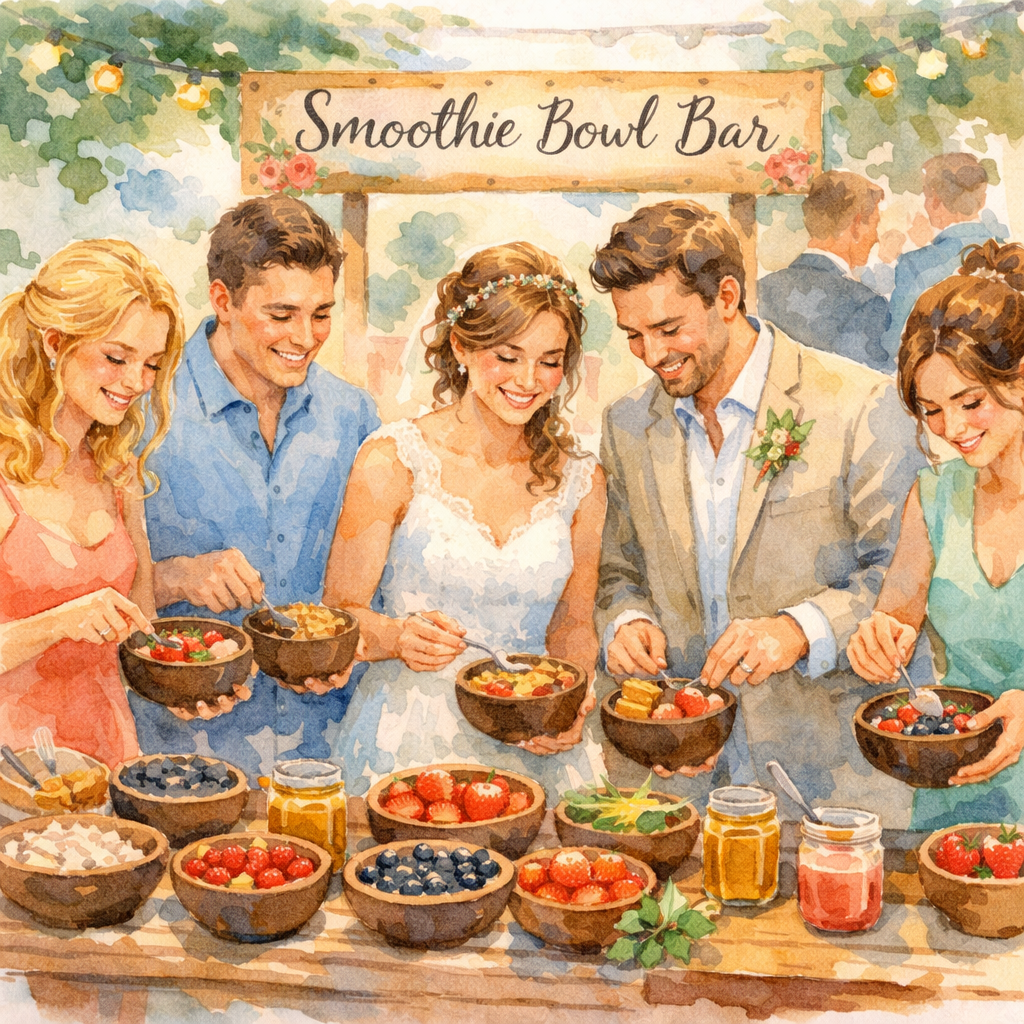
Reusable bowls and spoons: Coconut‑shell bowls or ceramic ramekins give an organic feel. Provide wooden spoons and compostable napkins.
Serving table: Cover a long table with linen or butcher paper. Add small card holders to label each base and topping.
Blender station (optional): If you want to blend bowls to order, place a high‑speed blender at one end of the table. Even affordable models work; one blogger blended smoothies using a basic Ninja blender.
Sanitiser and waste bins: Keep hand sanitiser and compostable bins nearby for used bowls and spoons.
Smoothie Base Recipes
Prepare two or three bases the day before. Store them in pitchers in the refrigerator so you can pour them easily. Here are my favourite combinations:
Spicy Greens
Ingredients: spinach, unsweetened almond milk, lime juice, frozen mango or pineapple, a slice of jalapeño, and optional avocado or honey. Guests love it because it’s a vibrant green base with a subtle kick. Adjust the heat by removing the jalapeño seeds.
Strawberry Rhubarb
Ingredients: Stewed rhubarb (simmer chopped rhubarb with a little water and sugar), frozen strawberries, Greek yogurt, vanilla protein powder, coconut milk, honey. Guests love it because it’s tart and creamy with a pretty pink colour. Prepare the rhubarb compote ahead of time.
Budget Berry Blend
Ingredients: 1 cup frozen mixed berries, 1 cup frozen banana, ¼ cup almond or oat milk, optional tablespoon of hemp seeds. Guests love it because frozen fruit is cheaper than fresh and creates a thick, spoonable consistency. This base costs about $1.90 per serving.
Toppings and Extras
Variety is key. Offer at least ten toppings with different textures and colors:
Crunchy: granola, toasted oats, chopped nuts (almonds, cashews), pumpkin or sunflower seeds.
Sweet: dried cranberries, raisins, coconut flakes, cacao nibs, chocolate chips.
Fresh fruit: sliced kiwi, mango, berries, banana coins, pomegranate arils.
Sauces: honey, agave, maple syrup, melted almond or peanut butter, cashew cream or yogurt.
Superfoods: chia seeds, flax seeds, hemp hearts, bee pollen.
Spices: cinnamon, nutmeg, shredded coconut, fresh mint leaves.
Label everything clearly and provide small scoops or spoons. Leftover toppings can be used for granola or oatmeal later.
Decor and Presentation
Presentation is half the fun. Use wooden crates, woven baskets, and greenery to create a garden feel. Arrange the pitchers and toppings at varying heights using cake stands or overturned bowls. A hand‑lettered sign inviting guests to “Build Your Own Smoothie Bowl” sets the tone.
Tips and Variations
Plan for dietary restrictions: Offer dairy‑free milks and nut‑free toppings so everyone can participate.
Use seasonal produce: Feature peaches or cherries in summer and apples with cinnamon in fall to keep ingredients affordable.
Eco‑friendly touches: Choose compostable bowls and utensils, and provide bins for food waste. You can even donate leftover fruit to a local shelter.
Pair with other brunch items: Complement the smoothie bar with mini quiches, a bagel station or a waffle bar for a complete brunch spread. The brunch wedding case study shows how a small guest list keeps food costs manageable,
Encourage photo sharing: Create a wedding hashtag and display it near the bar so guests can post their colourful creations.
Creating a smoothie bowl bar was one of the best decisions we made for our wedding. It was affordable, interactive, and aligned perfectly with our values of healthy eating and sustainability. With a little planning and creativity, you can offer your guests a memorable experience that reflects your personality and leaves them talking about your brunch reception for years to come. Happy planning!